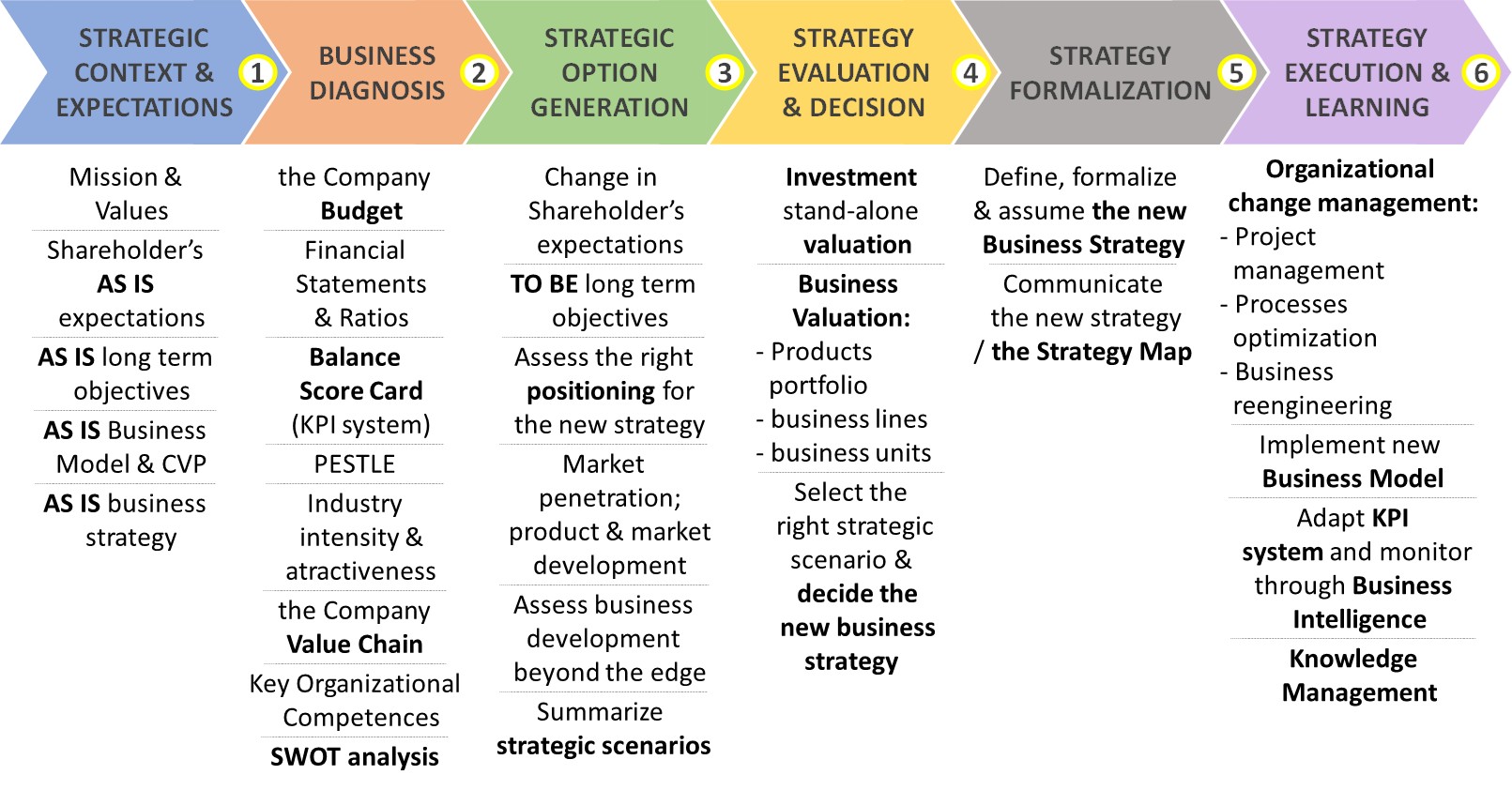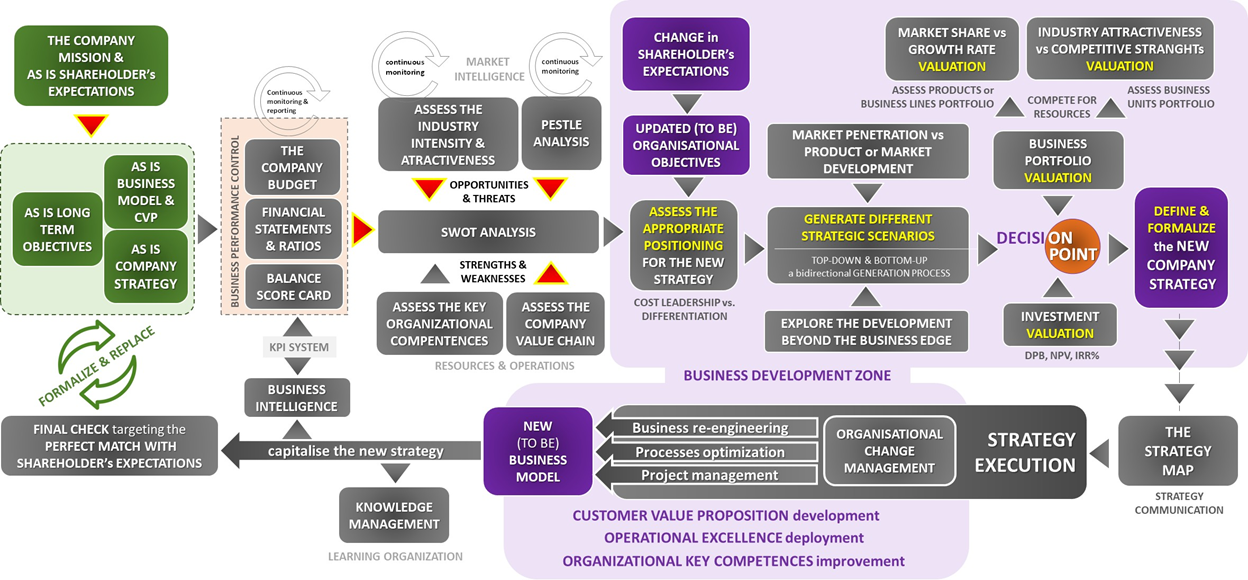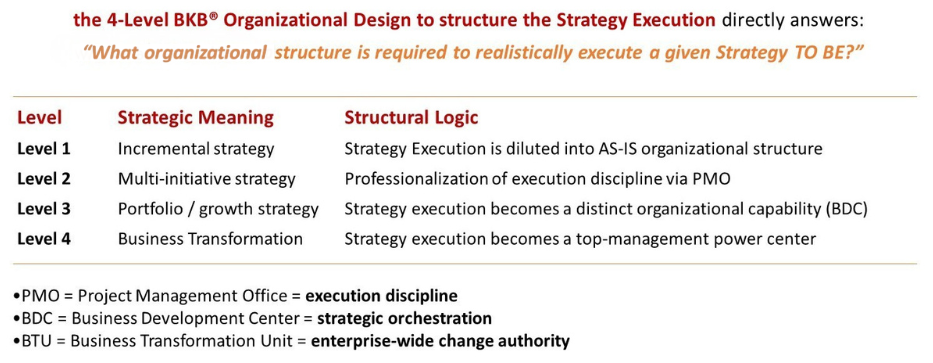
that defines:
BKB® does not claim ownership over classical strategy tools.
BKB® claims authorship over the original system logic that integrates, sequences, governs, and operationalizes those tools into a coherent, executable strategic decision framework.
BKB® originality lies in the architecture formed by five proprietary concepts, each solving a distinct and non-overlapping strategic problem.
represents the foundational methodological model upon which the Business Knowledge Builder BKB® strategic education program is built.
S(re)GP structures how companies generate, formalize, assume and execute business strategy in a consistent and experience-tested manner.
More precisely, S(re)GP is:
Role: Strategic engine
Problem solved: How strategy is generated, regenerated, and governed over time
S(re)GP defines strategy as a continuous, controlled process, not a one-off exercise. It establishes how strategic intent, market intelligence, internal capabilities, and governance interact to produce a valid Strategy TO BE.
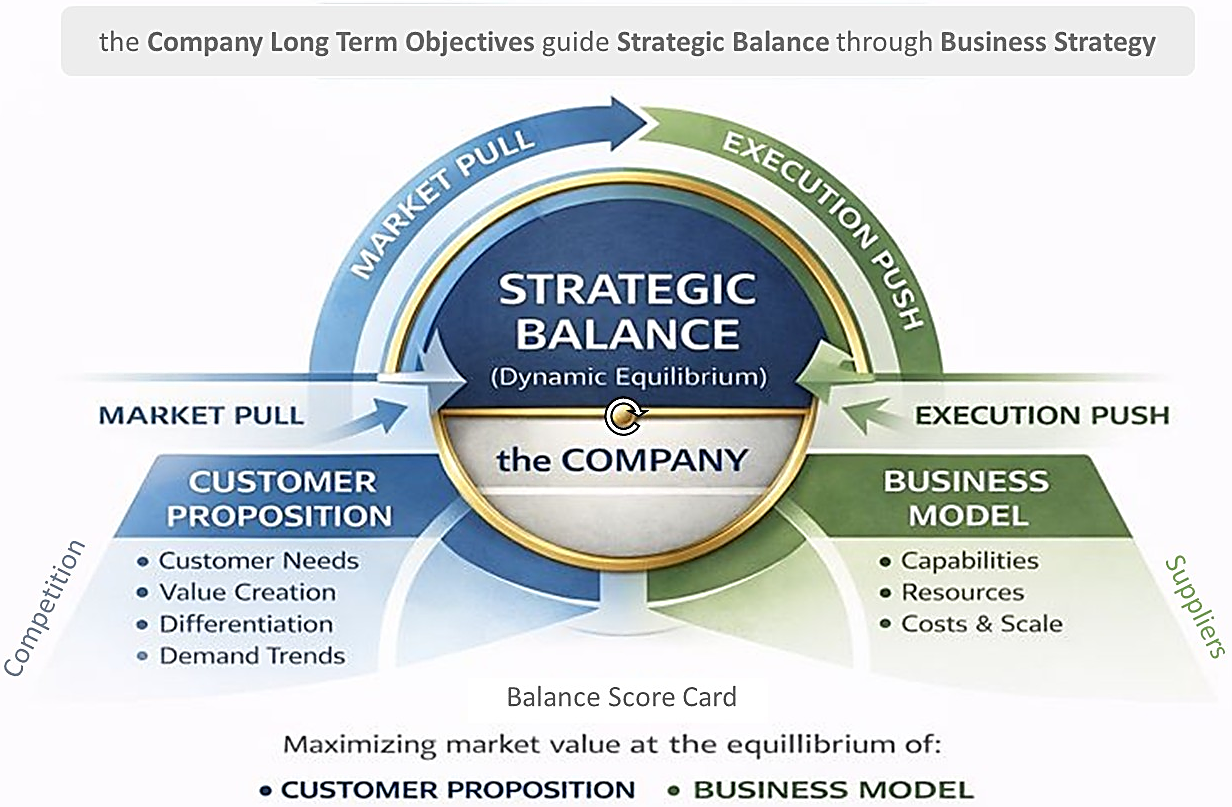
This concept introduces Strategic Balance as a managerial and governance construct that explains how companies maximize long-term market value by maintaining a dynamic equilibrium between their Customer Value Proposition and the company Business Model.
Role: Value governance mechanism
Problem solved: How companies avoid strategic overreach or under-ambition
Strategic Balance formalizes the tension between:
It ensures strategy remains sustainably executable, not theoretically attractive.
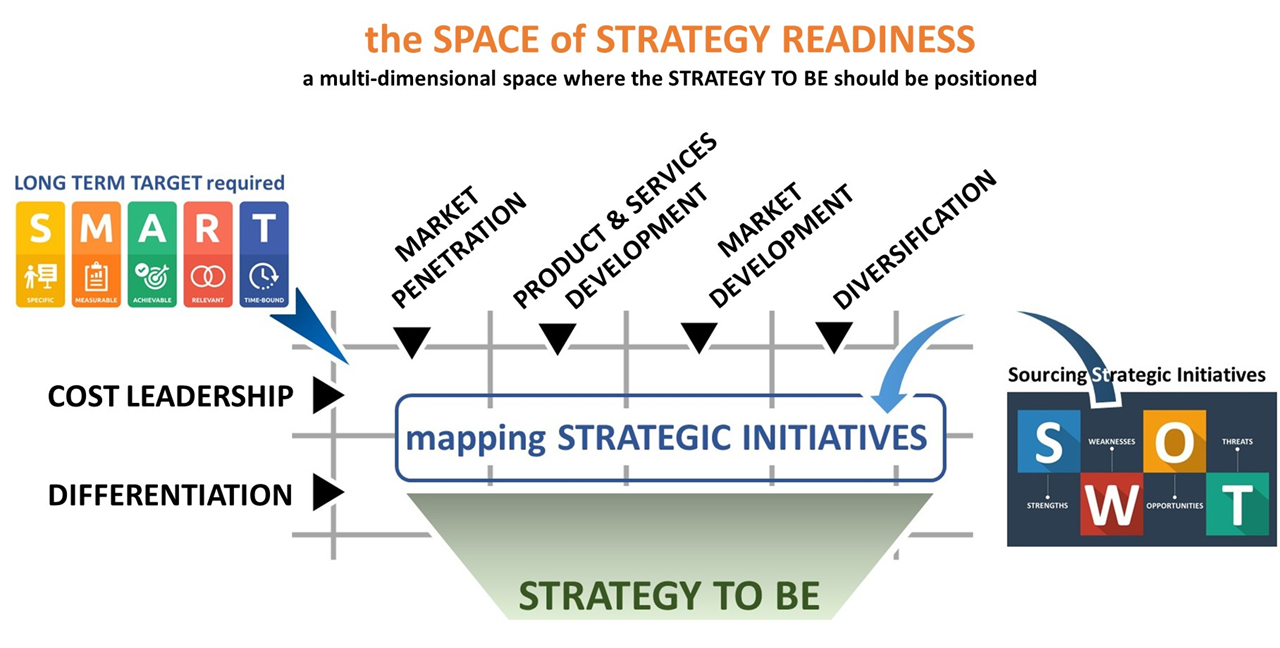
Role: Strategic feasibility filter
Problem solved:
Why many “good strategies” fail before execution
This concept defines the real strategic option space available to a company at a given moment, based on: capabilities, resources, constraints, organizational maturity
Strategy is not what is desired
— it is what the organization is ready to absorb and execute.
Role: Strategic investment selection system
Problem solved:
Why organizations fund the wrong initiatives
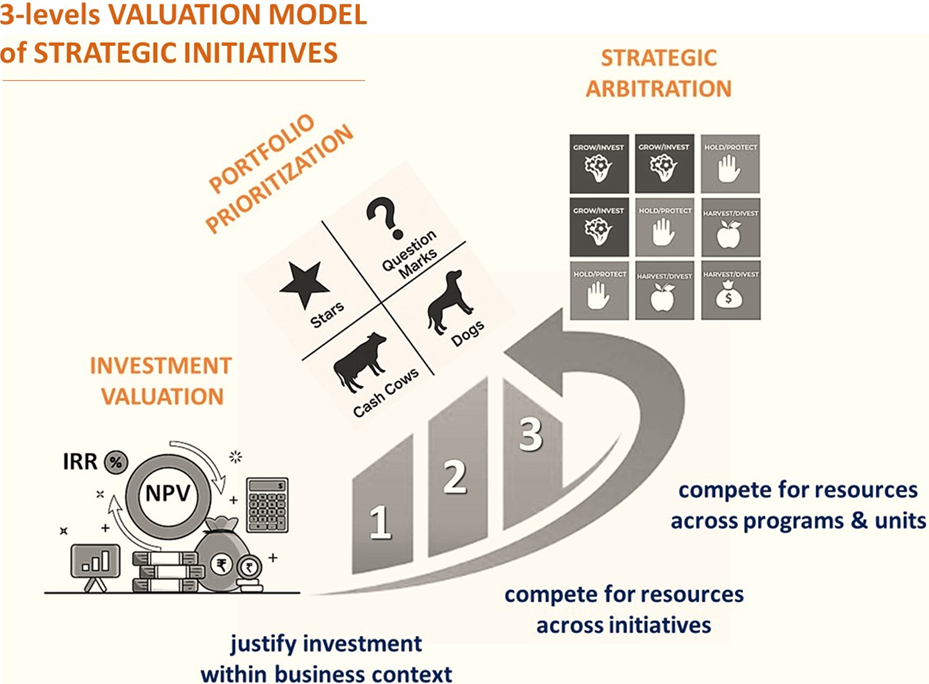
BKB introduces a mandatory, sequential valuation logic:
This prevents financial, portfolio, and strategic incoherence.